WP_Query Object
(
[query] => Array
(
[post_type] => tribe_events
[posts_per_page] => 5
[post_status] => publish
[orderby] => Array
(
[post_date] => ASC
[tec_event_start_date] => ASC
)
[order] => DESC
[tax_query] => Array
(
[0] => Array
(
[taxonomy] => post_tag
[field] => term_id
[terms] => 2174
)
)
[meta_query] => Array
(
[tec_event_start_date] => Array
(
[key] => _EventStartDate
[compare] => EXISTS
)
[tec_event_end_date] => Array
(
[key] => _EventEndDate
[value] => 2026-04-08 07:00:08
[compare] => >=
[type] => DATETIME
)
)
)
[query_vars] => Array
(
[post_type] => tribe_events
[posts_per_page] => 5
[post_status] => publish
[orderby] => Array
(
[post_date] => ASC
[tec_event_start_date] => ASC
)
[order] => DESC
[tax_query] => Array
(
[0] => Array
(
[taxonomy] => post_tag
[field] => term_id
[terms] => 2174
)
)
[error] =>
[m] =>
[p] => 0
[post_parent] =>
[subpost] =>
[subpost_id] =>
[attachment] =>
[attachment_id] => 0
[name] =>
[pagename] =>
[page_id] => 0
[second] =>
[minute] =>
[hour] =>
[day] => 0
[monthnum] => 0
[year] => 0
[w] => 0
[category_name] =>
[tag] =>
[cat] =>
[tag_id] => 2174
[author] =>
[author_name] =>
[feed] =>
[tb] =>
[paged] => 0
[meta_key] =>
[meta_value] =>
[preview] =>
[s] =>
[sentence] =>
[title] =>
[fields] => all
[menu_order] =>
[embed] =>
[category__in] => Array
(
)
[category__not_in] => Array
(
)
[category__and] => Array
(
)
[post__in] => Array
(
)
[post__not_in] => Array
(
)
[post_name__in] => Array
(
)
[tag__in] => Array
(
)
[tag__not_in] => Array
(
)
[tag__and] => Array
(
)
[tag_slug__in] => Array
(
)
[tag_slug__and] => Array
(
)
[post_parent__in] => Array
(
)
[post_parent__not_in] => Array
(
)
[author__in] => Array
(
)
[author__not_in] => Array
(
)
[search_columns] => Array
(
)
[meta_query] => Array
(
[tec_event_start_date] => Array
(
[key] => _EventStartDate
[compare] => EXISTS
)
[tec_event_end_date] => Array
(
[key] => _EventEndDate
[value] => 2026-04-08 07:00:08
[compare] => >=
[type] => DATETIME
)
)
[ignore_sticky_posts] =>
[suppress_filters] =>
[cache_results] => 1
[update_post_term_cache] => 1
[update_menu_item_cache] =>
[lazy_load_term_meta] => 1
[update_post_meta_cache] => 1
[nopaging] =>
[comments_per_page] => 50
[no_found_rows] =>
)
[tax_query] => WP_Tax_Query Object
(
[queries] => Array
(
[0] => Array
(
[taxonomy] => post_tag
[terms] => Array
(
[0] => 2174
)
[field] => term_id
[operator] => IN
[include_children] => 1
)
)
[relation] => AND
[table_aliases:protected] => Array
(
[0] => wp_term_relationships
)
[queried_terms] => Array
(
[post_tag] => Array
(
[terms] => Array
(
[0] => 2174
)
[field] => term_id
)
)
[primary_table] => wp_posts
[primary_id_column] => ID
)
[meta_query] => WP_Meta_Query Object
(
[queries] => Array
(
[tec_event_start_date] => Array
(
[key] => _EventStartDate
[compare] => EXISTS
)
[tec_event_end_date] => Array
(
[key] => _EventEndDate
[value] => 2026-04-08 07:00:08
[compare] => >=
[type] => DATETIME
)
[relation] => AND
)
[relation] => AND
[meta_table] => wp_postmeta
[meta_id_column] => post_id
[primary_table] => wp_posts
[primary_id_column] => ID
[table_aliases:protected] => Array
(
[0] => wp_postmeta
[1] => mt1
)
[clauses:protected] => Array
(
[tec_event_start_date] => Array
(
[key] => _EventStartDate
[compare] => EXISTS
[compare_key] => =
[alias] => wp_postmeta
[cast] => CHAR
)
[tec_event_end_date] => Array
(
[key] => _EventEndDate
[value] => 2026-04-08 07:00:08
[compare] => >=
[type] => DATETIME
[compare_key] => =
[alias] => mt1
[cast] => DATETIME
)
)
[has_or_relation:protected] =>
)
[date_query] =>
[request] => SELECT SQL_CALC_FOUND_ROWS wp_posts.ID
FROM wp_posts LEFT JOIN wp_term_relationships ON (wp_posts.ID = wp_term_relationships.object_id) INNER JOIN wp_postmeta ON ( wp_posts.ID = wp_postmeta.post_id ) INNER JOIN wp_postmeta AS mt1 ON ( wp_posts.ID = mt1.post_id )
WHERE 1=1 AND (
wp_term_relationships.term_taxonomy_id IN (2179)
) AND (
wp_postmeta.meta_key = '_EventStartDate'
AND
( mt1.meta_key = '_EventEndDate' AND CAST(mt1.meta_value AS DATETIME) >= '2026-04-08 07:00:08' )
) AND wp_posts.post_type = 'tribe_events' AND ((wp_posts.post_status = 'publish'))
GROUP BY wp_posts.ID
ORDER BY wp_posts.post_date ASC, CAST(wp_postmeta.meta_value AS CHAR) ASC
LIMIT 0, 5
[posts] => Array
(
[0] => WP_Post Object
(
[ID] => 91198
[post_author] => 1
[post_date] => 2026-03-28 11:02:23
[post_date_gmt] => 2026-03-28 11:02:23
[post_content] => Dear All,
The Department of Psychology invites you to a Seminar on "Putting the Brakes on Sociability: How microRNAs and Cytoskeletal Network Tune the Social Brain"
Abstract: Why does the brain actively restrain sociability—and what happens when this brake fails? In this talk, I will present recent work uncovering a microRNA-based mechanism that limits social interaction in the adult male brain. We show that loss of the placental-mammal–specific miR-379-410 cluster in hippocampal excitatory neurons produces striking hypersociability, without broadly disrupting anxiety or memory. At the cellular level, this behavioral shift is driven by induction of an actomyosin gene network, leading to enlarged dendritic spines and strengthened excitatory synapses. Reintroducing a minimal three-microRNA signature or pharmacologically inhibiting actomyosin contractility is sufficient to normalize both synaptic function and social behavior. Finally, we identify reciprocal dysregulation of this microRNA–actomyosin pathway in human neurons modeling Williams–Beuren syndrome, a condition marked by hypersociability. Together, these findings reveal an unexpected cytoskeletal mechanism that actively constrains sociability, raising new questions about how social drive is tuned across development and sex, and dysregulated in neurodevelopmental and neuropsychiatric disease.
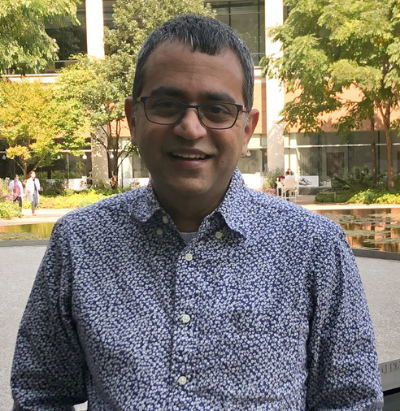
About the Speaker: Dr. Ramanathan Narayanan is a neuroscientist whose research focuses on how neuronal cytoskeletal dynamics shape behavior and contribute to neurodevelopmental and neuropsychiatric disorders. He earned his PhD from the International Max Planck Research School for Neurosciences (Germany) and has held postdoctoral positions at ETH Zurich and the Roche Innovation Center, Basel. His work has been published in leading journals such as Cell Reports, Molecular Autism and Brain, and he is a recipient of multiple prestigious fellowships, including the Max Planck Stipend of Excellence, Roche and ETH Zurich Postdoctoral Fellowships.
We look forward to your active participation.
[post_title] => Psychology Seminar
[post_excerpt] =>
[post_status] => publish
[comment_status] => closed
[ping_status] => closed
[post_password] =>
[post_name] => psychology-seminar
[to_ping] =>
[pinged] =>
[post_modified] => 2026-03-28 11:02:23
[post_modified_gmt] => 2026-03-28 11:02:23
[post_content_filtered] =>
[post_parent] => 0
[guid] => https://www.ashoka.edu.in?post_type=tribe_events&p=91198
[menu_order] => 0
[post_type] => tribe_events
[post_mime_type] =>
[comment_count] => 0
[filter] => raw
)
)
[post_count] => 1
[current_post] => -1
[before_loop] => 1
[in_the_loop] =>
[post] => WP_Post Object
(
[ID] => 91198
[post_author] => 1
[post_date] => 2026-03-28 11:02:23
[post_date_gmt] => 2026-03-28 11:02:23
[post_content] => Dear All,
The Department of Psychology invites you to a Seminar on "Putting the Brakes on Sociability: How microRNAs and Cytoskeletal Network Tune the Social Brain"
Abstract: Why does the brain actively restrain sociability—and what happens when this brake fails? In this talk, I will present recent work uncovering a microRNA-based mechanism that limits social interaction in the adult male brain. We show that loss of the placental-mammal–specific miR-379-410 cluster in hippocampal excitatory neurons produces striking hypersociability, without broadly disrupting anxiety or memory. At the cellular level, this behavioral shift is driven by induction of an actomyosin gene network, leading to enlarged dendritic spines and strengthened excitatory synapses. Reintroducing a minimal three-microRNA signature or pharmacologically inhibiting actomyosin contractility is sufficient to normalize both synaptic function and social behavior. Finally, we identify reciprocal dysregulation of this microRNA–actomyosin pathway in human neurons modeling Williams–Beuren syndrome, a condition marked by hypersociability. Together, these findings reveal an unexpected cytoskeletal mechanism that actively constrains sociability, raising new questions about how social drive is tuned across development and sex, and dysregulated in neurodevelopmental and neuropsychiatric disease.
About the Speaker: Dr. Ramanathan Narayanan is a neuroscientist whose research focuses on how neuronal cytoskeletal dynamics shape behavior and contribute to neurodevelopmental and neuropsychiatric disorders. He earned his PhD from the International Max Planck Research School for Neurosciences (Germany) and has held postdoctoral positions at ETH Zurich and the Roche Innovation Center, Basel. His work has been published in leading journals such as Cell Reports, Molecular Autism and Brain, and he is a recipient of multiple prestigious fellowships, including the Max Planck Stipend of Excellence, Roche and ETH Zurich Postdoctoral Fellowships.
We look forward to your active participation.
[post_title] => Psychology Seminar
[post_excerpt] =>
[post_status] => publish
[comment_status] => closed
[ping_status] => closed
[post_password] =>
[post_name] => psychology-seminar
[to_ping] =>
[pinged] =>
[post_modified] => 2026-03-28 11:02:23
[post_modified_gmt] => 2026-03-28 11:02:23
[post_content_filtered] =>
[post_parent] => 0
[guid] => https://www.ashoka.edu.in?post_type=tribe_events&p=91198
[menu_order] => 0
[post_type] => tribe_events
[post_mime_type] =>
[comment_count] => 0
[filter] => raw
)
[comment_count] => 0
[current_comment] => -1
[found_posts] => 1
[max_num_pages] => 1
[max_num_comment_pages] => 0
[is_single] =>
[is_preview] =>
[is_page] =>
[is_archive] => 1
[is_date] =>
[is_year] =>
[is_month] =>
[is_day] =>
[is_time] =>
[is_author] =>
[is_category] =>
[is_tag] => 1
[is_tax] =>
[is_search] =>
[is_feed] =>
[is_comment_feed] =>
[is_trackback] =>
[is_home] =>
[is_privacy_policy] =>
[is_404] =>
[is_embed] =>
[is_paged] =>
[is_admin] =>
[is_attachment] =>
[is_singular] =>
[is_robots] =>
[is_favicon] =>
[is_posts_page] =>
[is_post_type_archive] => 1
[query_vars_hash:WP_Query:private] => b8d8512eb930be7e7fe8d3891d1ef108
[query_vars_changed:WP_Query:private] => 1
[thumbnails_cached] =>
[allow_query_attachment_by_filename:protected] =>
[stopwords:WP_Query:private] =>
[compat_fields:WP_Query:private] => Array
(
[0] => query_vars_hash
[1] => query_vars_changed
)
[compat_methods:WP_Query:private] => Array
(
[0] => init_query_flags
[1] => parse_tax_query
)
[query_cache_key:WP_Query:private] => wp_query:ee5c55df12b8240233d133513b773217
[tribe_is_event] => 1
[tribe_is_multi_posttype] =>
[tribe_is_event_category] =>
[tribe_is_event_venue] =>
[tribe_is_event_organizer] =>
[tribe_is_event_query] => 1
[tribe_is_past] =>
)


















.png)