

Department of Physics - Ashoka University

Other links:

Other links:

Department of Physics

The department of physics started in 2017 and has been growing in size and scope to encompass a number of contemporary research areas. Our key focus research areas currently are Condensed Matter Physics (Soft and Hard), Biophysics, Astrophysics, Cosmology and Quantum Field theory. Please refer to the faculty profile pages for more information on the research interests of our faculty members.

We have a PhD program in physics where we aim to select motivated and committed students with a passion for research and to train them to be active and independent researchers.

Our undergraduate physics program provides a solid grounding  in the traditional core undergraduate physics curriculum and also an opportunity for students to pursue more eclectic interests in the sciences or beyond. Besides pursuing higher studies in physics, students get the necessary training and skills which can be used in other scientific fields and interdisciplinary endeavors.

The details of courses (graduate and undergraduate) taught at the physics department can be found here.
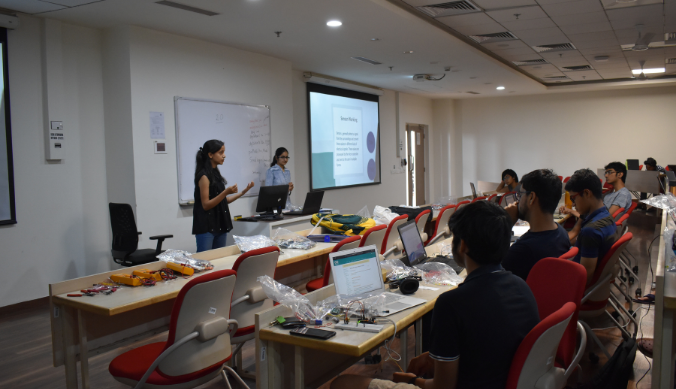
Programmes

Physics Faculty

The department of Physics has faculty members working on a wide rage of topics including Theoretical Condensed Matter Physics, Soft Matter Systems, Biophysics, Cosmology and Quantum Field Theory.
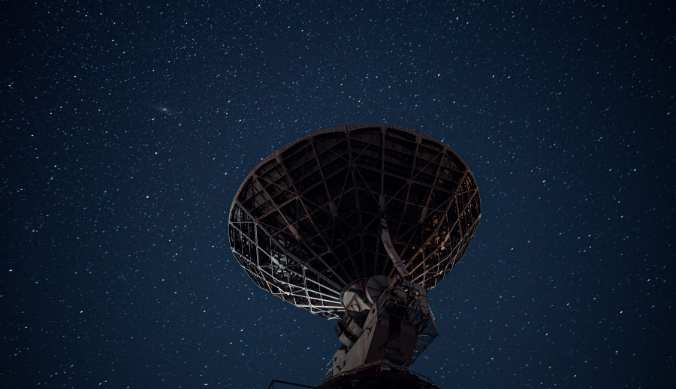
Astrophysics and Cosmology (Theoretical/Observational/Computational)

Astrophysics and Cosmology (Theoretical/Observational/Computational)

Astrophysics is a branch of space science that uses the principles of physics and chemistry to understand the universe. It explores the birth, life, and death of stars, galaxies, planets, and other cosmic objects, as well as the fundamental nature of space and time. Cosmology is a branch of physics and metaphysics dealing with the nature of the universe, the cosmos.The aim of cosmology is to apply laws of physics to the universe as a whole. Observations tell us that the universe is neither eternal nor static, and therefore it raises questions as to when and how did the universe start? What did it look like in the past? How will it evolve in the future? Astrophysics is closely related to astronomy and cosmology, often working in collaboration to address complex questions about the universe.
Quantum Physics (Theoretical)

Quantum Physics (Theoretical)

Quantum Field theory is a well-tested framework describing nature across a wide range of length / energy scales, with diverse applications across Particle Physics, Cosmology, Condensed Matter Physics and other areas of physics. Within this domain, the work in the department has focussed on Conformal Quantum Field Theories of different kinds - relativistic, non-relativistic and supersymmetric. Also under active investigation are topics spanning Quantum information and Quantum many-body theory. In particular, recent work has focussed on quantum complexity measures with a view towards the study of chaos in non-integrable quantum dynamics.
Condensed Matter Physics and Biophysics

Condensed Matter Physics and Biophysics

Research in condensed matter physics explores the physical properties of matter in regimes where the interactions between constituent particles are significant enough to lead to collective behaviour. Modern condensed matter physics, both experimental and theoretical, includes quantum mechanical systems as well as systems that can be understood largely through classical physics. It includes the study of magnetism, semiconductors and superconductors, focusing on elucidating fundamental phenomena including collective excitations, topological order, and quantum phase transitions. Soft condensed matter physics, sometimes called the physics of complex fluids, investigates materials that are easily deformable. Such systems exhibit novel and often nonlinear flow properties. They include polymers, colloids, gels, fluids and liquid crystals. These can be modeled using tools of statistical mechanics.
WP_Query Object
(
    [query] => Array
        (
            [post_type] => tribe_events
            [posts_per_page] => 5
            [post_status] => publish
            [orderby] => Array
                (
                    [post_date] => ASC
                    [tec_event_start_date] => ASC
                )

            [order] => DESC
            [tax_query] => Array
                (
                    [0] => Array
                        (
                            [taxonomy] => post_tag
                            [field] => term_id
                            [terms] => 2172
                        )

                )

            [meta_query] => Array
                (
                    [tec_event_start_date] => Array
                        (
                            [key] => _EventStartDate
                            [compare] => EXISTS
                        )

                    [tec_event_end_date] => Array
                        (
                            [key] => _EventEndDate
                            [value] => 2026-09-17 09:54:34
                            [compare] => >=
                            [type] => DATETIME
                        )

                )

        )

    [query_vars] => Array
        (
            [post_type] => tribe_events
            [posts_per_page] => 5
            [post_status] => publish
            [orderby] => Array
                (
                    [post_date] => ASC
                    [tec_event_start_date] => ASC
                )

            [order] => DESC
            [tax_query] => Array
                (
                    [0] => Array
                        (
                            [taxonomy] => post_tag
                            [field] => term_id
                            [terms] => 2172
                        )

                )

            [error] => 
            [m] => 
            [p] => 0
            [post_parent] => 
            [subpost] => 
            [subpost_id] => 
            [attachment] => 
            [attachment_id] => 0
            [name] => 
            [pagename] => 
            [page_id] => 0
            [second] => 
            [minute] => 
            [hour] => 
            [day] => 0
            [monthnum] => 0
            [year] => 0
            [w] => 0
            [category_name] => 
            [tag] => 
            [cat] => 
            [tag_id] => 2172
            [author] => 
            [author_name] => 
            [feed] => 
            [tb] => 
            [paged] => 0
            [meta_key] => 
            [meta_value] => 
            [preview] => 
            [s] => 
            [sentence] => 
            [title] => 
            [fields] => all
            [menu_order] => 
            [embed] => 
            [category__in] => Array
                (
                )

            [category__not_in] => Array
                (
                )

            [category__and] => Array
                (
                )

            [post__in] => Array
                (
                )

            [post__not_in] => Array
                (
                )

            [post_name__in] => Array
                (
                )

            [tag__in] => Array
                (
                )

            [tag__not_in] => Array
                (
                )

            [tag__and] => Array
                (
                )

            [tag_slug__in] => Array
                (
                )

            [tag_slug__and] => Array
                (
                )

            [post_parent__in] => Array
                (
                )

            [post_parent__not_in] => Array
                (
                )

            [author__in] => Array
                (
                )

            [author__not_in] => Array
                (
                )

            [search_columns] => Array
                (
                )

            [meta_query] => Array
                (
                    [tec_event_start_date] => Array
                        (
                            [key] => _EventStartDate
                            [compare] => EXISTS
                        )

                    [tec_event_end_date] => Array
                        (
                            [key] => _EventEndDate
                            [value] => 2026-09-17 09:54:34
                            [compare] => >=
                            [type] => DATETIME
                        )

                )

            [ignore_sticky_posts] => 
            [suppress_filters] => 
            [cache_results] => 1
            [update_post_term_cache] => 1
            [update_menu_item_cache] => 
            [lazy_load_term_meta] => 1
            [update_post_meta_cache] => 1
            [nopaging] => 
            [comments_per_page] => 50
            [no_found_rows] => 
        )

    [tax_query] => WP_Tax_Query Object
        (
            [queries] => Array
                (
                    [0] => Array
                        (
                            [taxonomy] => post_tag
                            [terms] => Array
                                (
                                    [0] => 2172
                                )

                            [field] => term_id
                            [operator] => IN
                            [include_children] => 1
                        )

                )

            [relation] => AND
            [table_aliases:protected] => Array
                (
                    [0] => wp_term_relationships
                )

            [queried_terms] => Array
                (
                    [post_tag] => Array
                        (
                            [terms] => Array
                                (
                                    [0] => 2172
                                )

                            [field] => term_id
                        )

                )

            [primary_table] => wp_posts
            [primary_id_column] => ID
        )

    [meta_query] => WP_Meta_Query Object
        (
            [queries] => Array
                (
                    [tec_event_start_date] => Array
                        (
                            [key] => _EventStartDate
                            [compare] => EXISTS
                        )

                    [tec_event_end_date] => Array
                        (
                            [key] => _EventEndDate
                            [value] => 2026-09-17 09:54:34
                            [compare] => >=
                            [type] => DATETIME
                        )

                    [relation] => AND
                )

            [relation] => AND
            [meta_table] => wp_postmeta
            [meta_id_column] => post_id
            [primary_table] => wp_posts
            [primary_id_column] => ID
            [table_aliases:protected] => Array
                (
                    [0] => wp_postmeta
                    [1] => mt1
                )

            [clauses:protected] => Array
                (
                    [tec_event_start_date] => Array
                        (
                            [key] => _EventStartDate
                            [compare] => EXISTS
                            [compare_key] => =
                            [alias] => wp_postmeta
                            [cast] => CHAR
                        )

                    [tec_event_end_date] => Array
                        (
                            [key] => _EventEndDate
                            [value] => 2026-09-17 09:54:34
                            [compare] => >=
                            [type] => DATETIME
                            [compare_key] => =
                            [alias] => mt1
                            [cast] => DATETIME
                        )

                )

            [has_or_relation:protected] => 
        )

    [date_query] => 
    [request] => SELECT SQL_CALC_FOUND_ROWS  wp_posts.ID
					 FROM wp_posts  LEFT JOIN wp_term_relationships ON (wp_posts.ID = wp_term_relationships.object_id) INNER JOIN wp_postmeta ON ( wp_posts.ID = wp_postmeta.post_id )  INNER JOIN wp_postmeta AS mt1 ON ( wp_posts.ID = mt1.post_id )
					 WHERE 1=1  AND ( 
  wp_term_relationships.term_taxonomy_id IN (2177)
) AND ( 
  wp_postmeta.meta_key = '_EventStartDate' 
  AND 
  ( mt1.meta_key = '_EventEndDate' AND CAST(mt1.meta_value AS DATETIME) >= '2026-09-17 09:54:34' )
) AND wp_posts.post_type = 'tribe_events' AND ((wp_posts.post_status = 'publish'))
					 GROUP BY wp_posts.ID
					 ORDER BY wp_posts.post_date ASC, CAST(wp_postmeta.meta_value AS CHAR) ASC
					 LIMIT 0, 5
    [posts] => Array
        (
            [0] => WP_Post Object
                (
                    [ID] => 99207
                    [post_author] => 1
                    [post_date] => 2026-09-16 12:57:03
                    [post_date_gmt] => 2026-09-16 12:57:03
                    [post_content] => 

Abstract: Spin-selective electron transmission makes chiral molecules a promising candidate for applications ranging from molecular spintronics to chemical and pharmaceutical technologies. By controlling the relative spin orientation of electrons, it may be possible to influence electron-transfer processes and, consequently, spin-dependent chemical transformations. This phenomenon originates from the Chirality-Induced Spin Selectivity (CISS) effect, in which electron transmission through a chiral molecular system depends on the electron spin orientation and the handedness of the molecule. We have demonstrated through several experimental approaches that electron transmission through chiral molecules adsorbed on metallic surfaces is spin selective. Furthermore, the interplay between the metal-chiral molecule interface, electron correlations, molecular orientation, and the direction of the applied magnetic field gives rise to characteristic magnetoresistance behavior. 


More recently, my research has moved toward understanding CISS at the single-molecule level using mechanically controllable break junctions (MCBJ). In this approach, a single chiral molecule is electrically connected between two metallic electrodes, enabling direct measurement of electron transmission through an individual molecular junction. This provides a route to investigate the CISS effect in the molecular limit, where effects arising from molecular structure, electrode-molecule coupling, transport channels, and spin-dependent transmission can be examined more directly. Ultimately, this work bridges the gap between ensemble measurements and single-molecule spin transport, providing a platform for understanding the microscopic origin of CISS and for developing future single-molecule spin filters, molecular spintronic devices, and spin-sensitive nanoscale sensors.

About the Speaker: Dr. Tapan Kumar Das is a Research Scientist at the Weizmann Institute of Science, Israel. He received his Ph.D. from the Indian Institute of Technology Madras (IIT Madras), where his doctoral research focused on charge transport and optoelectronic properties of molecular and nanoscale systems. His current research lies at the interface of physics, chemistry and, biology, with a particular focus on the Chirality-Induced Spin Selectivity (CISS) effect, molecular spintronics, and spin-dependent electron transport. His work explores spin-selective transport in chiral molecules, biomolecules, and materials using magnetoresistance, Hall-effect measurements, and, more recently, single-molecule mechanically controllable break-junction (MCBJ) techniques. His research aims to bridge ensemble and single-molecule spin transport toward applications in molecular spintronics, quantum-enabled technologies, and biosensing. He was part of the team recognized with the Royal Society of Chemistry’s 2022 Horizon Prize (Stephanie L Kwolek Award) for pioneering research on chiral materials for controlling electron and photon spin.

We look forward to your active participation.

[post_title] => Physics Seminar [post_excerpt] => [post_status] => publish [comment_status] => closed [ping_status] => closed [post_password] => [post_name] => physics-seminar [to_ping] => [pinged] => [post_modified] => 2026-09-16 12:57:03 [post_modified_gmt] => 2026-09-16 12:57:03 [post_content_filtered] => [post_parent] => 0 [guid] => https://www.ashoka.edu.in?post_type=tribe_events&p=99207 [menu_order] => 0 [post_type] => tribe_events [post_mime_type] => [comment_count] => 0 [filter] => raw ) ) [post_count] => 1 [current_post] => -1 [before_loop] => 1 [in_the_loop] => [post] => WP_Post Object ( [ID] => 99207 [post_author] => 1 [post_date] => 2026-09-16 12:57:03 [post_date_gmt] => 2026-09-16 12:57:03 [post_content] =>

Abstract: Spin-selective electron transmission makes chiral molecules a promising candidate for applications ranging from molecular spintronics to chemical and pharmaceutical technologies. By controlling the relative spin orientation of electrons, it may be possible to influence electron-transfer processes and, consequently, spin-dependent chemical transformations. This phenomenon originates from the Chirality-Induced Spin Selectivity (CISS) effect, in which electron transmission through a chiral molecular system depends on the electron spin orientation and the handedness of the molecule. We have demonstrated through several experimental approaches that electron transmission through chiral molecules adsorbed on metallic surfaces is spin selective. Furthermore, the interplay between the metal-chiral molecule interface, electron correlations, molecular orientation, and the direction of the applied magnetic field gives rise to characteristic magnetoresistance behavior. 


More recently, my research has moved toward understanding CISS at the single-molecule level using mechanically controllable break junctions (MCBJ). In this approach, a single chiral molecule is electrically connected between two metallic electrodes, enabling direct measurement of electron transmission through an individual molecular junction. This provides a route to investigate the CISS effect in the molecular limit, where effects arising from molecular structure, electrode-molecule coupling, transport channels, and spin-dependent transmission can be examined more directly. Ultimately, this work bridges the gap between ensemble measurements and single-molecule spin transport, providing a platform for understanding the microscopic origin of CISS and for developing future single-molecule spin filters, molecular spintronic devices, and spin-sensitive nanoscale sensors.

About the Speaker: Dr. Tapan Kumar Das is a Research Scientist at the Weizmann Institute of Science, Israel. He received his Ph.D. from the Indian Institute of Technology Madras (IIT Madras), where his doctoral research focused on charge transport and optoelectronic properties of molecular and nanoscale systems. His current research lies at the interface of physics, chemistry and, biology, with a particular focus on the Chirality-Induced Spin Selectivity (CISS) effect, molecular spintronics, and spin-dependent electron transport. His work explores spin-selective transport in chiral molecules, biomolecules, and materials using magnetoresistance, Hall-effect measurements, and, more recently, single-molecule mechanically controllable break-junction (MCBJ) techniques. His research aims to bridge ensemble and single-molecule spin transport toward applications in molecular spintronics, quantum-enabled technologies, and biosensing. He was part of the team recognized with the Royal Society of Chemistry’s 2022 Horizon Prize (Stephanie L Kwolek Award) for pioneering research on chiral materials for controlling electron and photon spin.

We look forward to your active participation.

[post_title] => Physics Seminar [post_excerpt] => [post_status] => publish [comment_status] => closed [ping_status] => closed [post_password] => [post_name] => physics-seminar [to_ping] => [pinged] => [post_modified] => 2026-09-16 12:57:03 [post_modified_gmt] => 2026-09-16 12:57:03 [post_content_filtered] => [post_parent] => 0 [guid] => https://www.ashoka.edu.in?post_type=tribe_events&p=99207 [menu_order] => 0 [post_type] => tribe_events [post_mime_type] => [comment_count] => 0 [filter] => raw ) [comment_count] => 0 [current_comment] => -1 [found_posts] => 1 [max_num_pages] => 1 [max_num_comment_pages] => 0 [is_single] => [is_preview] => [is_page] => [is_archive] => 1 [is_date] => [is_year] => [is_month] => [is_day] => [is_time] => [is_author] => [is_category] => [is_tag] => 1 [is_tax] => [is_search] => [is_feed] => [is_comment_feed] => [is_trackback] => [is_home] => [is_privacy_policy] => [is_404] => [is_embed] => [is_paged] => [is_admin] => [is_attachment] => [is_singular] => [is_robots] => [is_favicon] => [is_sitemap] => [is_posts_page] => [is_post_type_archive] => 1 [query_vars_hash:WP_Query:private] => 9232f03855fe76bafd8df0cea8a2d418 [query_vars_changed:WP_Query:private] => 1 [thumbnails_cached] => [allow_query_attachment_by_filename:protected] => [stopwords:WP_Query:private] => [compat_fields:WP_Query:private] => Array ( [0] => query_vars_hash [1] => query_vars_changed ) [compat_methods:WP_Query:private] => Array ( [0] => init_query_flags [1] => parse_tax_query ) [query_cache_key:WP_Query:private] => wp_query:924b232553fd9fdf8a18bd715bb7396d [tribe_is_event] => 1 [tribe_is_multi_posttype] => [tribe_is_event_category] => [tribe_is_event_venue] => [tribe_is_event_organizer] => [tribe_is_event_query] => 1 [tribe_is_past] => )

News

Events

News

In the Media

Physics Seminar

Contact Us

For any queries regarding Physics programmes, please contact: -

Dipankar Bhattacharya

Head of Department

hod.phy@ashoka.edu.in

Suratna Das

UG Course Coordinator

ug.physics@ashoka.edu.in

Susmita Saha

Ph.D. Programme Coordinator

physics.phd@ashoka.edu.in

Amin A Nizami

Colloquium Coordinator

amin.nizami@ashoka.edu.in

Raunak Chaudhary

UG Student Representative

phys.rep@ashoka.edu.in

Shiwani Katiyar

Department Administrative Manager

physics.dept@ashoka.edu.in

Sticky Button