

Department of International Relations - Ashoka University

Other links:

Other links:

Department of International Relations

The department’s teaching programme provides a strong foundation for students seeking postgraduate opportunities at top institutions worldwide, but also prepares them for diverse tracks including in policy think tanks, international business, government, NGOs, and journalism.

The department’s pedagogical approach reflects its faculty’s areas of expertise, encouraging interdisciplinary inquiry and innovative research methodologies. It offers a wide range of courses, from core modules in IR Theory, International History, War and Strategy, Foreign Policy Analysis, and Research Methods to electives on topics such as international conflict analysis, cyber security, populism, and various area studies modules. These courses integrate classical IR lenses with emerging perspectives, providing students with critical vantage points from which to examine canonical IR concepts and opportunities to bridge theory with real-world issues.

As one of the leading locations for the study of International Relations in India that seeks to train the next generation of IR scholars and researchers at the helm of international affairs, the department embraces theoretical and methodological diversity with a view to enhance the understanding of contemporary global politics.

Its diverse faculty combine Global South perspectives and area studies knowledge with traditional Western approaches to international relations. With regional expertise on South and Southeast Asia, China, the Asia-Pacific, and Latin America and thematic expertise on tangible issues including energy, non-traditional and cyber security, and technology, they bridge scholarly expertise with policy engagement, and conduct research in areas such as IR theory, international history, foreign policy, diplomacy, security, globalization, gender, and identity.

Faculty at International Relations

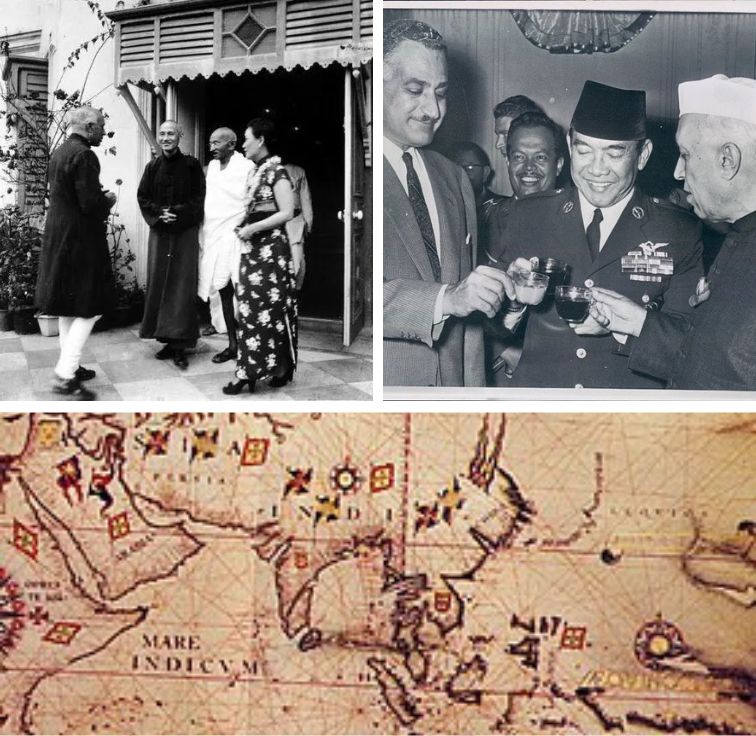
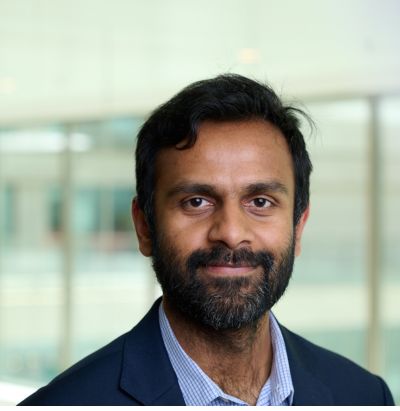
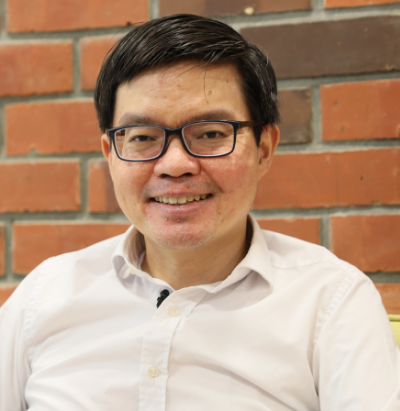
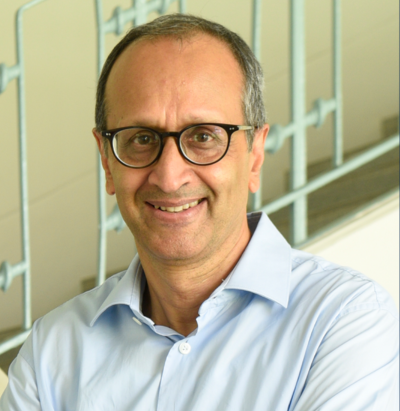
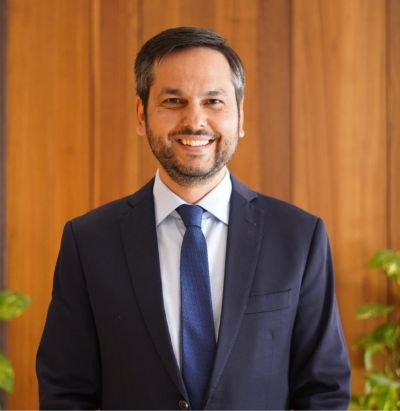
Faculty at the IR Department are at the cutting edge of various aspects of the discipline: India's diplomatic history; evolution of strategic thought in post colonial India; analysis of patterns of internationalist thought and behaviour in China, SouthEast Asia and Latin America; challenging Eurocentric frames of reference for understanding IR; and the influence of geopolitics on the making of foreign policy. Collectively, their research shapes the broader discussion and analysis of South Asia’s internationalist dilemmas, both within India and outside.
WP_Query Object
(
    [query] => Array
        (
            [post_type] => tribe_events
            [posts_per_page] => 5
            [post_status] => publish
            [orderby] => Array
                (
                    [post_date] => ASC
                    [tec_event_start_date] => ASC
                )

            [order] => DESC
            [tax_query] => Array
                (
                    [0] => Array
                        (
                            [taxonomy] => post_tag
                            [field] => term_id
                            [terms] => 1545
                        )

                )

            [meta_query] => Array
                (
                    [tec_event_start_date] => Array
                        (
                            [key] => _EventStartDate
                            [compare] => EXISTS
                        )

                    [tec_event_end_date] => Array
                        (
                            [key] => _EventEndDate
                            [value] => 2026-08-28 07:29:53
                            [compare] => >=
                            [type] => DATETIME
                        )

                )

        )

    [query_vars] => Array
        (
            [post_type] => tribe_events
            [posts_per_page] => 5
            [post_status] => publish
            [orderby] => Array
                (
                    [post_date] => ASC
                    [tec_event_start_date] => ASC
                )

            [order] => DESC
            [tax_query] => Array
                (
                    [0] => Array
                        (
                            [taxonomy] => post_tag
                            [field] => term_id
                            [terms] => 1545
                        )

                )

            [error] => 
            [m] => 
            [p] => 0
            [post_parent] => 
            [subpost] => 
            [subpost_id] => 
            [attachment] => 
            [attachment_id] => 0
            [name] => 
            [pagename] => 
            [page_id] => 0
            [second] => 
            [minute] => 
            [hour] => 
            [day] => 0
            [monthnum] => 0
            [year] => 0
            [w] => 0
            [category_name] => 
            [tag] => 
            [cat] => 
            [tag_id] => 1545
            [author] => 
            [author_name] => 
            [feed] => 
            [tb] => 
            [paged] => 0
            [meta_key] => 
            [meta_value] => 
            [preview] => 
            [s] => 
            [sentence] => 
            [title] => 
            [fields] => all
            [menu_order] => 
            [embed] => 
            [category__in] => Array
                (
                )

            [category__not_in] => Array
                (
                )

            [category__and] => Array
                (
                )

            [post__in] => Array
                (
                )

            [post__not_in] => Array
                (
                )

            [post_name__in] => Array
                (
                )

            [tag__in] => Array
                (
                )

            [tag__not_in] => Array
                (
                )

            [tag__and] => Array
                (
                )

            [tag_slug__in] => Array
                (
                )

            [tag_slug__and] => Array
                (
                )

            [post_parent__in] => Array
                (
                )

            [post_parent__not_in] => Array
                (
                )

            [author__in] => Array
                (
                )

            [author__not_in] => Array
                (
                )

            [search_columns] => Array
                (
                )

            [meta_query] => Array
                (
                    [tec_event_start_date] => Array
                        (
                            [key] => _EventStartDate
                            [compare] => EXISTS
                        )

                    [tec_event_end_date] => Array
                        (
                            [key] => _EventEndDate
                            [value] => 2026-08-28 07:29:53
                            [compare] => >=
                            [type] => DATETIME
                        )

                )

            [ignore_sticky_posts] => 
            [suppress_filters] => 
            [cache_results] => 1
            [update_post_term_cache] => 1
            [update_menu_item_cache] => 
            [lazy_load_term_meta] => 1
            [update_post_meta_cache] => 1
            [nopaging] => 
            [comments_per_page] => 50
            [no_found_rows] => 
        )

    [tax_query] => WP_Tax_Query Object
        (
            [queries] => Array
                (
                    [0] => Array
                        (
                            [taxonomy] => post_tag
                            [terms] => Array
                                (
                                    [0] => 1545
                                )

                            [field] => term_id
                            [operator] => IN
                            [include_children] => 1
                        )

                )

            [relation] => AND
            [table_aliases:protected] => Array
                (
                    [0] => wp_term_relationships
                )

            [queried_terms] => Array
                (
                    [post_tag] => Array
                        (
                            [terms] => Array
                                (
                                    [0] => 1545
                                )

                            [field] => term_id
                        )

                )

            [primary_table] => wp_posts
            [primary_id_column] => ID
        )

    [meta_query] => WP_Meta_Query Object
        (
            [queries] => Array
                (
                    [tec_event_start_date] => Array
                        (
                            [key] => _EventStartDate
                            [compare] => EXISTS
                        )

                    [tec_event_end_date] => Array
                        (
                            [key] => _EventEndDate
                            [value] => 2026-08-28 07:29:53
                            [compare] => >=
                            [type] => DATETIME
                        )

                    [relation] => AND
                )

            [relation] => AND
            [meta_table] => wp_postmeta
            [meta_id_column] => post_id
            [primary_table] => wp_posts
            [primary_id_column] => ID
            [table_aliases:protected] => Array
                (
                    [0] => wp_postmeta
                    [1] => mt1
                )

            [clauses:protected] => Array
                (
                    [tec_event_start_date] => Array
                        (
                            [key] => _EventStartDate
                            [compare] => EXISTS
                            [compare_key] => =
                            [alias] => wp_postmeta
                            [cast] => CHAR
                        )

                    [tec_event_end_date] => Array
                        (
                            [key] => _EventEndDate
                            [value] => 2026-08-28 07:29:53
                            [compare] => >=
                            [type] => DATETIME
                            [compare_key] => =
                            [alias] => mt1
                            [cast] => DATETIME
                        )

                )

            [has_or_relation:protected] => 
        )

    [date_query] => 
    [request] => SELECT SQL_CALC_FOUND_ROWS  wp_posts.ID
					 FROM wp_posts  LEFT JOIN wp_term_relationships ON (wp_posts.ID = wp_term_relationships.object_id) INNER JOIN wp_postmeta ON ( wp_posts.ID = wp_postmeta.post_id )  INNER JOIN wp_postmeta AS mt1 ON ( wp_posts.ID = mt1.post_id )
					 WHERE 1=1  AND ( 
  wp_term_relationships.term_taxonomy_id IN (1550)
) AND ( 
  wp_postmeta.meta_key = '_EventStartDate' 
  AND 
  ( mt1.meta_key = '_EventEndDate' AND CAST(mt1.meta_value AS DATETIME) >= '2026-08-28 07:29:53' )
) AND wp_posts.post_type = 'tribe_events' AND ((wp_posts.post_status = 'publish'))
					 GROUP BY wp_posts.ID
					 ORDER BY wp_posts.post_date ASC, CAST(wp_postmeta.meta_value AS CHAR) ASC
					 LIMIT 0, 5
    [posts] => Array
        (
            [0] => WP_Post Object
                (
                    [ID] => 98051
                    [post_author] => 62
                    [post_date] => 2026-08-27 14:19:50
                    [post_date_gmt] => 2026-08-27 08:49:50
                    [post_content] => The Department of International Relations, Ashoka University, invites submissions for the symposium “Securing Insecurity: Paradoxes of Precarious Protection” taking place on 4th-5th March 2027, at Ashoka University in Sonipat (near New Delhi), India. We particularly welcome submissions from postdoctoral scholars and early-career researchers.

Description:

Contemporary world politics is structured by profound contradictions. International institutions coexist alongside renewed assertions of national sovereignty, protectionism, and revanchist nativism. Capital, data, and technology move across borders with unprecedented speed, while human mobility is increasingly stratified, surveilled, and restricted. Supply chains create potent forms of interdependence, yet they have simultaneously become instruments of coercion, extraction, and geopolitical vulnerability. The most consequential threats confronting political communities, including climate change, pandemics, food and energy insecurity, ecological extraction, and supply-chain disruptions, are transnational, interconnected, and resistant to territorial containment. Yet the institutions and practices through which security is pursued remain predominantly state-centric, militarised, and territorially bounded. The result is a widening disjuncture between the planetary and transnational character of contemporary insecurity and the national frameworks through which it is interpreted and governed.

This symposium begins from a central conceptual proposition: insecurity is increasingly becoming a form of stability. Insecurity can no longer simply be treated as a temporary interruption of an otherwise stable political order. Persistent threats, emergencies, and vulnerabilities have become routine features of governance and everyday life. Order is maintained through the continuous anticipation, management, and displacement of insecurity. The paradox, therefore, is that contemporary security practices may stabilise the very conditions of insecurity they claim to resolve. The symposium seeks theoretical, empirical, and interdisciplinary contributions that examine the paradoxes through which insecurity is produced, governed, normalised, and contested. Rather than merely identifying additional objects of security, it invites scholars to ask how persistent insecurity has become politically productive, institutionally embedded, and materially uneven, and what this transformation demands from the study and practice of security.

Contributors may engage with, but are not limited to, the following questions:
  • How do contemporary (in)security practices manage, redistribute, or stabilise insecurity rather than eliminate it?
  • How can we understand the paradox of a state that remains materially powerful while becoming increasingly inadequate as the sole framework through which security is conceptualised?
  • How are vulnerability and exposure to threat differentiated across gender, race, caste, class, disability, and geographical location?
  • How do anxiety, alienation, and fear shape political responses to geopolitical, ecological, and technological transformation?
  • Does the distinction between war and peace remain analytically useful under conditions of sanctions, proxy warfare, cyber operations, infrastructural disruption, and grey-zone conflict?
  • How are threats made visible, sensible, and politically compelling through images, sound, spectacle, popular culture, and digital platforms?
  • Can security be reimagined through care, solidarity, and interdependence rather than through threat, exclusion, and violence?
  • What might post-security, demilitarised, decolonial, or utopian approaches contribute to a field so frequently structured by crisis, emergency, and anticipation?
Submissions: Please submit your abstract (maximum 500 words) via the following form by 15th October, 2026. We expect to send out decisions by mid-November. Some funding is available for travel, accommodation, and meals. Decisions on the allocation of funding will be made on the basis of availability and participants’ funding statements. We look forward to your proposals, Natallia Khaniejo and Ananya Sharma, Department of International Relations. [post_title] => Call for Papers - Securing Insecurity: Paradoxes of Precarious Protection [post_excerpt] => [post_status] => publish [comment_status] => closed [ping_status] => closed [post_password] => [post_name] => call-for-papers-securing-insecurity-paradoxes-of-precarious-protection [to_ping] => [pinged] => [post_modified] => 2026-08-27 14:32:52 [post_modified_gmt] => 2026-08-27 09:02:52 [post_content_filtered] => [post_parent] => 0 [guid] => https://www.ashoka.edu.in/?post_type=tribe_events&p=98051 [menu_order] => 0 [post_type] => tribe_events [post_mime_type] => [comment_count] => 0 [filter] => raw ) ) [post_count] => 1 [current_post] => -1 [before_loop] => 1 [in_the_loop] => [post] => WP_Post Object ( [ID] => 98051 [post_author] => 62 [post_date] => 2026-08-27 14:19:50 [post_date_gmt] => 2026-08-27 08:49:50 [post_content] => The Department of International Relations, Ashoka University, invites submissions for the symposium “Securing Insecurity: Paradoxes of Precarious Protection” taking place on 4th-5th March 2027, at Ashoka University in Sonipat (near New Delhi), India. We particularly welcome submissions from postdoctoral scholars and early-career researchers. Description: Contemporary world politics is structured by profound contradictions. International institutions coexist alongside renewed assertions of national sovereignty, protectionism, and revanchist nativism. Capital, data, and technology move across borders with unprecedented speed, while human mobility is increasingly stratified, surveilled, and restricted. Supply chains create potent forms of interdependence, yet they have simultaneously become instruments of coercion, extraction, and geopolitical vulnerability. The most consequential threats confronting political communities, including climate change, pandemics, food and energy insecurity, ecological extraction, and supply-chain disruptions, are transnational, interconnected, and resistant to territorial containment. Yet the institutions and practices through which security is pursued remain predominantly state-centric, militarised, and territorially bounded. The result is a widening disjuncture between the planetary and transnational character of contemporary insecurity and the national frameworks through which it is interpreted and governed. This symposium begins from a central conceptual proposition: insecurity is increasingly becoming a form of stability. Insecurity can no longer simply be treated as a temporary interruption of an otherwise stable political order. Persistent threats, emergencies, and vulnerabilities have become routine features of governance and everyday life. Order is maintained through the continuous anticipation, management, and displacement of insecurity. The paradox, therefore, is that contemporary security practices may stabilise the very conditions of insecurity they claim to resolve. The symposium seeks theoretical, empirical, and interdisciplinary contributions that examine the paradoxes through which insecurity is produced, governed, normalised, and contested. Rather than merely identifying additional objects of security, it invites scholars to ask how persistent insecurity has become politically productive, institutionally embedded, and materially uneven, and what this transformation demands from the study and practice of security. Contributors may engage with, but are not limited to, the following questions:
  • How do contemporary (in)security practices manage, redistribute, or stabilise insecurity rather than eliminate it?
  • How can we understand the paradox of a state that remains materially powerful while becoming increasingly inadequate as the sole framework through which security is conceptualised?
  • How are vulnerability and exposure to threat differentiated across gender, race, caste, class, disability, and geographical location?
  • How do anxiety, alienation, and fear shape political responses to geopolitical, ecological, and technological transformation?
  • Does the distinction between war and peace remain analytically useful under conditions of sanctions, proxy warfare, cyber operations, infrastructural disruption, and grey-zone conflict?
  • How are threats made visible, sensible, and politically compelling through images, sound, spectacle, popular culture, and digital platforms?
  • Can security be reimagined through care, solidarity, and interdependence rather than through threat, exclusion, and violence?
  • What might post-security, demilitarised, decolonial, or utopian approaches contribute to a field so frequently structured by crisis, emergency, and anticipation?
Submissions: Please submit your abstract (maximum 500 words) via the following form by 15th October, 2026. We expect to send out decisions by mid-November. Some funding is available for travel, accommodation, and meals. Decisions on the allocation of funding will be made on the basis of availability and participants’ funding statements. We look forward to your proposals, Natallia Khaniejo and Ananya Sharma, Department of International Relations. [post_title] => Call for Papers - Securing Insecurity: Paradoxes of Precarious Protection [post_excerpt] => [post_status] => publish [comment_status] => closed [ping_status] => closed [post_password] => [post_name] => call-for-papers-securing-insecurity-paradoxes-of-precarious-protection [to_ping] => [pinged] => [post_modified] => 2026-08-27 14:32:52 [post_modified_gmt] => 2026-08-27 09:02:52 [post_content_filtered] => [post_parent] => 0 [guid] => https://www.ashoka.edu.in/?post_type=tribe_events&p=98051 [menu_order] => 0 [post_type] => tribe_events [post_mime_type] => [comment_count] => 0 [filter] => raw ) [comment_count] => 0 [current_comment] => -1 [found_posts] => 1 [max_num_pages] => 1 [max_num_comment_pages] => 0 [is_single] => [is_preview] => [is_page] => [is_archive] => 1 [is_date] => [is_year] => [is_month] => [is_day] => [is_time] => [is_author] => [is_category] => [is_tag] => 1 [is_tax] => [is_search] => [is_feed] => [is_comment_feed] => [is_trackback] => [is_home] => [is_privacy_policy] => [is_404] => [is_embed] => [is_paged] => [is_admin] => [is_attachment] => [is_singular] => [is_robots] => [is_favicon] => [is_sitemap] => [is_posts_page] => [is_post_type_archive] => 1 [query_vars_hash:WP_Query:private] => 1c816f40658d912216a39e6ac9a1831f [query_vars_changed:WP_Query:private] => 1 [thumbnails_cached] => [allow_query_attachment_by_filename:protected] => [stopwords:WP_Query:private] => [compat_fields:WP_Query:private] => Array ( [0] => query_vars_hash [1] => query_vars_changed ) [compat_methods:WP_Query:private] => Array ( [0] => init_query_flags [1] => parse_tax_query ) [query_cache_key:WP_Query:private] => wp_query:6061fe59434419458dbd541b42f2152c [tribe_is_event] => 1 [tribe_is_multi_posttype] => [tribe_is_event_category] => [tribe_is_event_venue] => [tribe_is_event_organizer] => [tribe_is_event_query] => 1 [tribe_is_past] => )

News

Events

News

Contact Us

For any queries regarding International Relations programmes, please contact: -

Quintijn Kat

Head of Department

quintijn.kat@ashoka.edu.in

Pratima Kadian

Department Manager

pratima.kadian@ashoka.edu.in

Shivam Adhikari

Student Representative

ir.rep@ashoka.edu.in

-

Sticky Button